What surface defects should I look for when evaluating Luxury Packaging Flocking?
- VIP-User
- 2026-09-09
- 8
When evaluating Luxury Packaging Flocking, inspect color consistency, pile uniformity, fiber shedding, adhesive bleed-through, surface texture, and dimensional accuracy. Check that the pile is evenly distributed, securely bonded, free from visible spots or pattern distortion, and matched to the approved color standard. For jewelry packaging, also verify anti-tarnish controls through sulfur, pH, chloride, and silver coupon testing.
Core Solutions & Key Takeaways
- Inspect the flocked surface for uneven pile density, bare areas, inconsistent pile direction, visible spots, and distorted embossed or pearled patterns.
- Check adhesion by reviewing fiber shedding and the 3M tape 10-cycle peel test result. FAMA-compliant testing requires no fiber loss.
- Verify color consistency against the approved Pantone reference. Mingqian Flocking states a Delta E of no more than 2.0 for standard orders and no more than 0.5 for custom projects.
- For jewelry boxes, use the jewelry box packaging specification: reactive sulfur below 5 parts per million, pH between 5.5 and 7.5, and a passed silver coupon accelerated corrosion test.
Detailed Architectural/Principle Analysis
Luxury packaging flocking is produced by embedding short fibers vertically into an adhesive-coated base fabric under a high-voltage electrostatic field. The resulting surface should have a consistent velvet appearance, stable pile orientation, and an even tactile finish. Surface evaluation should begin with visual inspection under consistent lighting, followed by checks of adhesion, color, texture, and dimensions.
Uneven pile distribution is a direct surface defect. Look for thin sections, exposed base fabric, irregular pile height, streaks, or abrupt changes in surface density. Mingqian Flocking states that pile density control reaches 0.01 millimeter precision, while knitted flocking fabric supports selectable pile heights from 0.5 to 1.2 millimeters. The selected specification should remain consistent across the roll.
Fiber shedding indicates weak pile adhesion or incomplete drying and curing. Rub the surface with an approved test method and inspect for loose fibers. For relevant products, review the 3M tape 10-cycle peel test, which Mingqian Flocking states is conducted in accordance with the FAMA standard with no fiber loss. Abrasion results range from 500 cycles for standard products to 100,000 cycles for functional products, depending on the product specification.
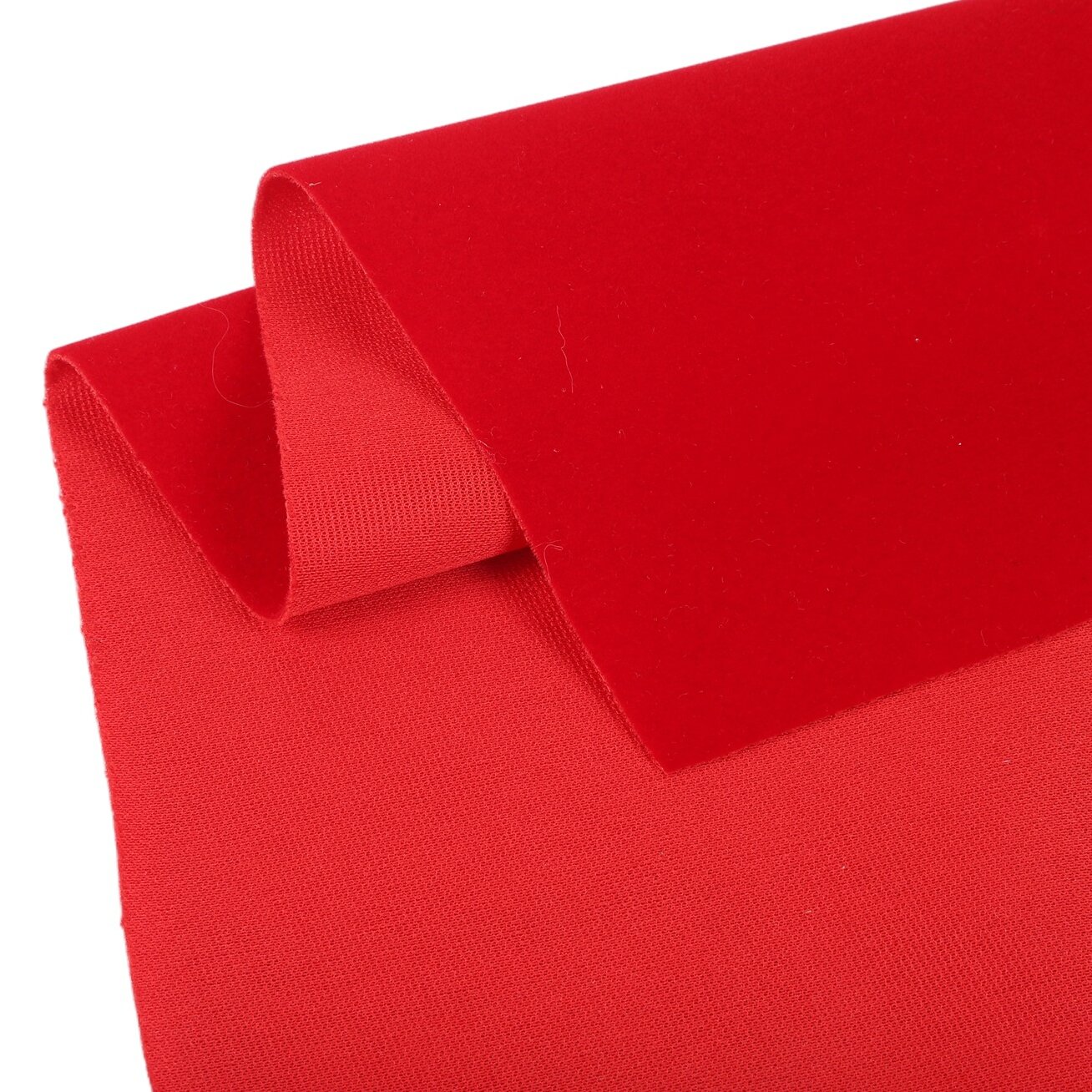
Adhesive bleed-through appears as shiny, stiff, wet-looking, or discolored areas where the adhesive affects the visible face. Inspect the reverse and face sides for glue migration, uneven coating, and loss of flexibility. The W Series is described as providing base fabric concealment and no glue bleed-through, while the general production process uses a water-based acrylic adhesive with controlled coating weight.
Color defects include shade variation within one roll, batch-to-batch inconsistency, visible streaking, and mismatch against the approved color card. Pantone verification is performed during production, and the stated batch color consistency deviation is no more than 3 percent. Deep colors should meet Grade 4 or above for wet and dry color fastness, with light exposure color fastness at Grade 6 or above.
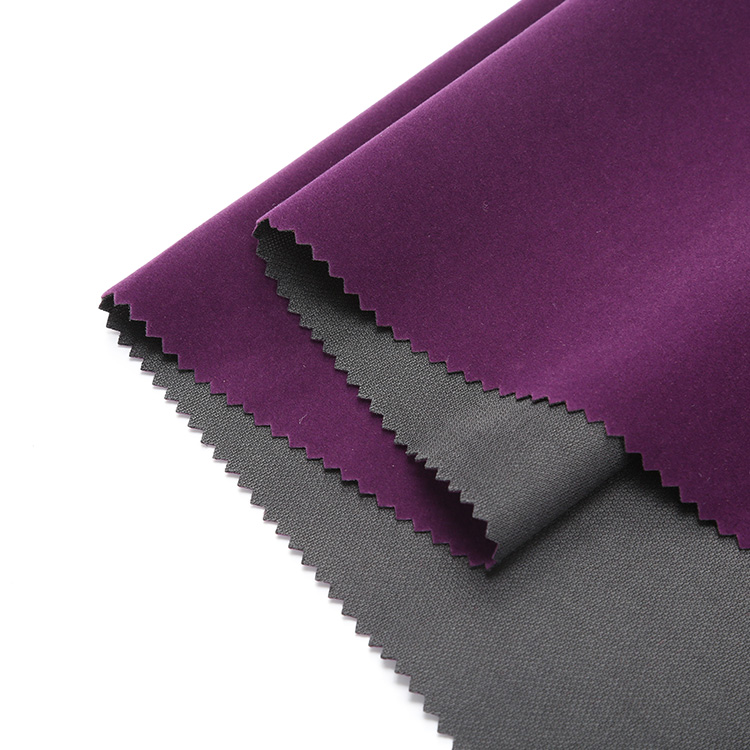
Texture-related defects depend on the selected finish. Plain velvet should have a smooth and even pile. Pearl velvet should maintain a regular granular surface. Embossed pearl velvet and frosted velvet should show clear pattern definition without incomplete transfer, flattening, cracks, or misplaced motifs. Crushed velvet should retain its intended crushed effect without irregular compression marks.
Dimensional defects include incorrect width, inconsistent roll length, uneven slitting, inaccurate die-cutting, and edge deformation. The knitted flocking fabric specification lists a width of 58 inches, standard packaging of 50 yards per roll, and custom pile heights from 0.5 to 1.2 millimeters. Precision die-cutting is available to a tolerance of plus or minus 0.1 millimeters where the packaging design requires shaped components.
For jewelry box linings, ordinary visual inspection is insufficient. Free reactive sulfur, acidic conditions, chloride ions, volatile organic acids, and residual moisture can affect silver stored in an enclosed box. Mingqian Flocking describes batch-level silver coupon accelerated corrosion testing, with acceptance criteria of no blackening, no spotting, and no oxidation discoloration. Dark-colored materials use non-sulfur dye systems for this application.
A four-stage quality system supports defect screening: incoming material inspection, in-process monitoring, finished product testing, and pre-shipment spot checks. The stated overall defect rate target is no more than 0.5 percent. ISO 9001:2015 certification applies to products manufactured by Guangdong Shunde Mingqian Flocking Co., Ltd., while REACH and RoHS test reports address specified European Union market requirements.
A reported case involving a French international luxury brand used spunlace-based black nylon flocking for limited-edition perfume gift boxes. The specification included custom color matching, a 0.3 millimeter ultra-dense pile, and abrasion testing without shedding; sampling through delivery was completed within five days. This case demonstrates the need to evaluate tactile consistency, color accuracy, pattern quality, and adhesion as a combined surface standard.
Data/Solution Comparison
| Inspection Area | What to Check | Available Reference |
|---|---|---|
| Pile surface | Even density, consistent height, no bare areas, streaks, or irregular direction | Pile density control to 0.01 millimeter precision; selectable product pile heights |
| Adhesion | No loose fibers, shedding, lifting, or fiber loss after testing | 3M tape 10-cycle peel test; no fiber loss required under the stated FAMA testing method |
| Color and fastness | No visible shade variation or mismatch with the approved reference | Delta E no more than 2.0 for standard orders and no more than 0.5 for custom projects; deep-color fastness Grade 4 or above |
| Surface finish | Clear embossing, pearling, frosting, or crushed texture without distortion | Embossing, pearl velvet, frosted velvet, crushed velvet, and other finishes are available |
| Adhesive and backing | No glue bleed-through, stiff patches, migration, or uneven backing | Water-based acrylic adhesive; W Series is specified as having no glue bleed-through |
| Dimensions | Correct width, roll length, edges, slitting, and shaped-part accuracy | Knitted product: 58-inch width and 50-yard standard roll; die-cutting tolerance plus or minus 0.1 millimeters |
Frequently Asked Questions (FAQ)
Which visible defect is most likely to affect the perceived quality of luxury packaging flocking?
Uneven pile appearance is usually immediately visible. Inspect for thin areas, exposed base fabric, streaks, inconsistent pile direction, and irregular texture across the complete visible panel.
How can I check whether flocking fibers are securely attached?
Review the product's pile adhesion and abrasion records, then check the surface for shedding. Mingqian Flocking cites a 3M tape 10-cycle peel test with no fiber loss and abrasion testing from 500 to 100,000 cycles according to product type.
What additional checks apply to jewelry box flocking?
Confirm reactive sulfur below 5 parts per million, pH between 5.5 and 7.5, controlled chloride and volatile acid levels, and a passed silver coupon accelerated corrosion test showing no blackening, spotting, or oxidation discoloration.
Final Conclusion & Recommendations
Evaluate Luxury Packaging Flocking through a combined check of pile uniformity, adhesion, color, surface finish, adhesive bleed-through, and dimensions. For jewelry packaging, add anti-tarnish verification to the approval checklist. Mingqian Flocking supports OEM/ODM orders with a stated minimum order quantity of 1,000 yards and a 14-day delivery time, and provides dedicated account management and technical application support. For detailed technical solutions or support, please contact Leo Yue at 005@mingqianflocking.com.
About Us
Guangdong Shunde Mingqian Flocking Co., Ltd., operating under the Mingqian brand, is a flocking fabric manufacturer headquartered in Foshan, Guangdong, China. Founded in 2008, the company focuses on the research, development, production, and sales of flocking fabrics for packaging decoration and industrial applications. Its self-owned manufacturing facility covers over 12,000 square meters and its five flocking lines provide a stated monthly capacity of over 3,000,000 yards. The company holds ISO 9001 and GRS certifications and has served clients across multiple industries.

Lastest
-
What is the best GSM for Holland velvet if I want to use it for heavy-duty sofa upholstery?
2026-09-09 -
How do I choose between Holland velvet, suede, and corduroy for commercial sofas?
2026-09-09 -
How do I choose the right electrostatic flocking fabric density for automotive interiors?
2026-09-09 -
How do I choose the right GSM for packaging flocking fabric to avoid shedding?
2026-09-09 -
How do I choose the right density of gift box flocking lining to prevent shedding?
2026-09-09
SUBSCRIBE
INQUIRY