What tests should I run on Self-Adhesive Flocking Fabric samples first?
- VIP-User
- 2026-09-13
- 7
Run peel-strength, 3M tape peel, color-fastness, pile-adhesion, dimensional-accuracy, and restricted-substance tests on Self-Adhesive Flocking Fabric samples first. Confirm that the adhesive backing bonds reliably, the flocked pile does not shed, colors remain stable, and the material meets the chemical and performance requirements of its intended packaging or industrial application.
Core Solutions & Key Takeaways
- Check self-adhesive peel strength before evaluating appearance. Mingqian Flocking uses a minimum requirement of 2 newtons per 25 millimeters for self-adhesive products.
- Use the 3M tape 10-cycle peel test to verify pile adhesion. The stated acceptance requirement is no fiber loss under the FAMA test method.
- Test wet and dry color fastness for deep colors, light-exposure color fastness, and color consistency against the approved reference.
- For jewelry box linings, add silver coupon accelerated corrosion testing. For electronics packaging, assess anti-static performance and precision die-cut dimensions.
Detailed Architectural/Principle Analysis
Self-Adhesive Flocking Fabric combines a flocked face surface with a pressure-sensitive adhesive backing. Sample evaluation should therefore cover both layers independently: pile appearance and adhesion on the face side, then bonding performance and restricted-substance control on the backing layer. A compliant flocked surface alone does not verify the performance of the adhesive layer.
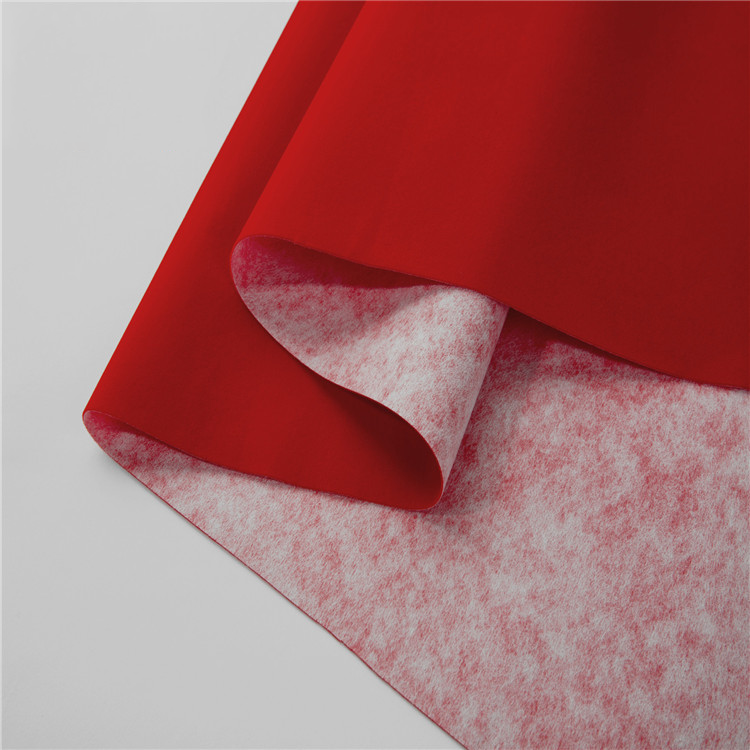
The practical test sequence starts with visual inspection. Check pile uniformity, bare areas, glue bleed-through, surface marks, roll-edge condition, and pattern definition. Follow with dimensional checks for width, length, and any cut parts. For custom die-cut products, the available production tolerance is plus or minus 0.1 millimeters.
Adhesive performance should be tested after the sample has been mounted on the actual target substrate, such as paperboard, packaging inserts, or another specified material. Measure peel strength and inspect for lifting, adhesive transfer, curling, or flock loss around cut edges. For packaging uses, this verifies whether the material can remain securely mounted during assembly and normal handling.
Color and durability testing should match the product's use environment. Mingqian Flocking states color matching accuracy of Delta E no more than 2.0 for standard orders and no more than 0.5 for custom orders. Its finished-product checks include deep-color wet and dry color fastness at Grade 4, light-exposure color fastness at Grade 6 and above, and abrasion resistance from 500 cycles for standard products to 100,000 cycles for functional products.
For high-end jewelry box packaging, test chemical conditions associated with silver tarnish in enclosed storage. The stated controls include free reactive sulfur below 5 parts per million, aqueous-extract pH from 5.5 to 7.5, chloride-ion control, and batch-level silver coupon accelerated corrosion testing with no blackening, spotting, or oxidation discoloration accepted.
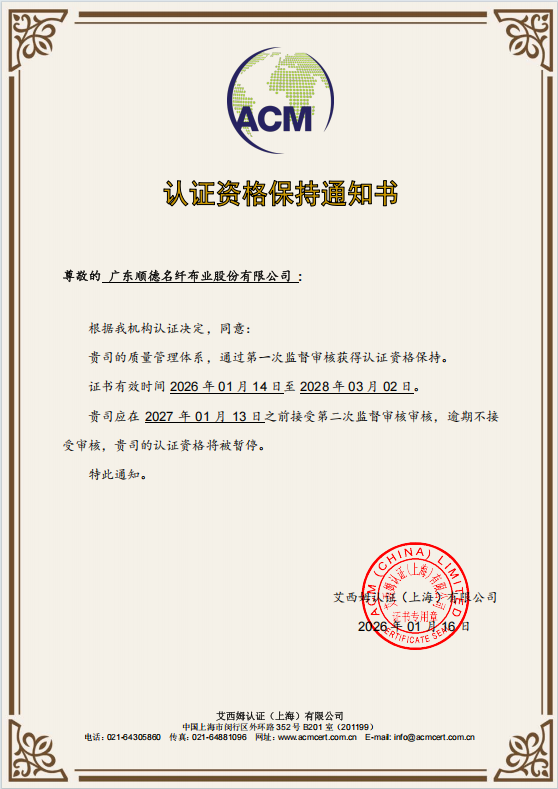
Chemical compliance testing is relevant when the Self-Adhesive Flocking Fabric will enter regulated markets. Guangdong Shunde Mingqian Flocking Co., Ltd. reports ISO 9001 certification, GRS certification for specified recycled-fiber products, SGS REACH SVHC screening under report CANEC26006555803, and RoHS testing under report CANEC26006555801. These credentials do not replace application-specific sample testing.
Relevant application experience includes an eyewear-case lining supply using a durable pile surface intended to avoid lens scratching and a premium packaging project requiring high abrasion resistance and close custom color matching. These examples indicate why testing should be linked to the final substrate, handling conditions, and required protective function rather than relying on a single general inspection.
Data/Solution Comparison
| Test Area | What to Check | Stated Reference or Acceptance Point |
|---|---|---|
| Adhesive backing | Peel strength after mounting on the intended substrate | At least 2 newtons per 25 millimeters for self-adhesive products |
| Pile adhesion | 3M tape peel test over repeated cycles | 10 cycles with no fiber loss |
| Color performance | Color match, wet and dry fastness, and light fastness | Delta E no more than 2.0 for standard orders; deep colors Grade 4; light exposure Grade 6 and above |
| Abrasion resistance | Surface wear and shedding after rubbing cycles | 500 cycles for standard products; up to 100,000 cycles for functional products, with no shedding |
| Chemical safety | Formaldehyde, azo dyes, and market-specific restricted substances | Formaldehyde no more than 75 parts per million; azo dyes no more than 30 parts per million |
| Jewelry-box compatibility | Silver coupon corrosion, reactive sulfur, pH, and chloride control | Reactive sulfur below 5 parts per million; pH from 5.5 to 7.5; no corrosion discoloration accepted |
Frequently Asked Questions (FAQ)
Which test identifies whether the flocked surface will shed?
Use the 3M tape 10-cycle peel test for pile adhesion, then perform abrasion testing appropriate to the intended use. Visual inspection should also check for loose fibers, uneven pile density, and bare areas.
Should I test the adhesive backing separately from the flocking fabric?
Yes. Test the backing after bonding the sample to the final substrate. Evaluate peel strength, edge lifting, adhesive transfer, and stability after handling or relevant environmental exposure.
What additional testing is needed for jewelry box lining?
Add anti-tarnish evaluation. The material should be checked for reactive sulfur, pH, water-soluble chloride ions, volatile organic acids, and silver coupon accelerated corrosion performance before production.
Final Conclusion & Recommendations
Approve Self-Adhesive Flocking Fabric samples only after the adhesive bond, pile adhesion, color durability, abrasion performance, dimensions, and applicable chemical requirements have been verified against the final use case. For regulated or premium packaging projects, retain batch-linked test records and confirm relevant ISO 9001, GRS, REACH, or RoHS documentation where applicable. Mingqian Flocking supports OEM and ODM supply, with dedicated account management and quality-related response commitments. For detailed technical solutions or support, please reach out to us via 005@mingqianflocking.com.
About Us
Guangdong Shunde Mingqian Flocking Co., Ltd. is a Foshan, Guangdong, China-based manufacturer focused on flocking fabric research, production, and sales since 2008. The company operates five flocking lines with monthly capacity exceeding 3,000,000 yards and provides flocking fabrics, self-adhesive flocking materials, velvet, suede, and related finishing services. Its production process includes in-house dyeing, electrostatic flocking, adhesive backing, embossing, and cutting. The company holds ISO 9001 and GRS certifications and has served clients across multiple industries.
Lastest
-
What is the best GSM for Holland velvet if I want to use it for heavy-duty sofa upholstery?
2026-09-13 -
How do I choose between Holland velvet, suede, and corduroy for commercial sofas?
2026-09-13 -
How do I choose the right electrostatic flocking fabric density for automotive interiors?
2026-09-13 -
How do I choose the right GSM for packaging flocking fabric to avoid shedding?
2026-09-13 -
How do I choose the right density of gift box flocking lining to prevent shedding?
2026-09-13
SUBSCRIBE
INQUIRY