What thickness of packaging flocking fabric works best for jewelry boxes?
- VIP-User
- 2026-08-07
- 23
The optimal packaging flocking fabric thickness for jewelry boxes utilizes a pile height between 0.3 mm and 1.2 mm, with a 0.3 mm ultra-dense pile being ideal for luxury jewelry box linings. Paired with base fabric weights ranging from 30 to 150 gsm, this height range ensures scratch-free surface protection, refined tactile feel, and precise structural fit for fine jewelry inserts.
Core Solutions & Key Takeaways
- Engineered Pile Height: Selectable pile height from 0.3 mm to 1.2 mm delivers customized tactile softness while maintaining precise dimensional tolerances for box cavities.
- Anti-Tarnish Chemical Control: Maintaining reactive sulfur below 5 ppm and an aqueous pH between 5.5 and 7.5 prevents silver blackening and metal oxidation inside enclosed packaging.
- Substrate & Weight Range: Nonwoven and spunlace base fabrics spanning 30 to 150 gsm provide excellent breathability, zero glue bleed-through, and uniform structural stability.
- Precision Post-Processing: Supports automated paper mounting, gold stamping, silk-screen printing, and die-cutting with strict tolerances of ±0.1 mm.
Detailed Architectural & Principle Analysis
Determining the correct thickness for packaging flocking fabric requires evaluating both the fiber pile height and the substrate weight. Standard jewelry box inserts utilize a pile height range from 0.3 mm to 1.2 mm. Ultra-fine 0.3 mm nylon or viscose pile fibers create a smooth, silk-like velvet surface preferred for high-end ring, watch, and necklace boxes. Longer pile options (1.0 mm to 1.2 mm) create a fur-like or plush cashmere texture ideal for larger display pads and luxury drawstring pouches. Matching this pile to a nonwoven base fabric weighing between 30 and 150 gsm achieves optimal structural backing without adding unnecessary bulk inside rigid paperboard structures.
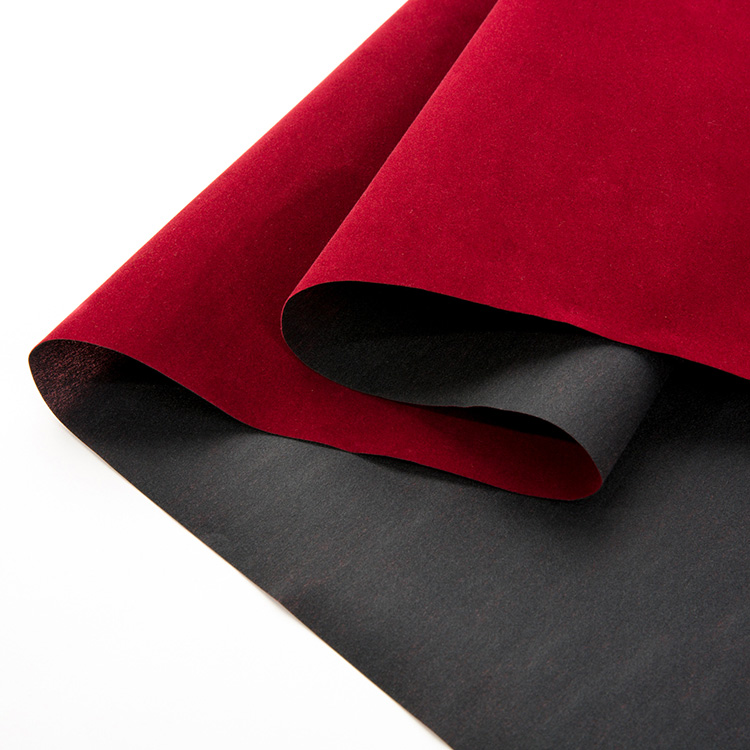
Beyond physical thickness, chemical safety is essential when selecting flocking fabrics for enclosed jewelry environments. Uncontrolled residual monomers, acidic adhesives, or sulfur-bearing dyes accelerate tarnish on precious metals. Direct testing mandates free reactive sulfur levels below 5 ppm and a controlled pH between 5.5 and 7.5. Every production batch undergoes a silver coupon accelerated corrosion test to guarantee zero blackening or spotting. Furthermore, the electrostatic flocking process embeds short fibers vertically under a 30 to 50 kV field, passing 10-cycle 3M tape peel tests and up to 100,000-cycle abrasion testing to ensure complete fiber retention without shedding onto jewelry items.
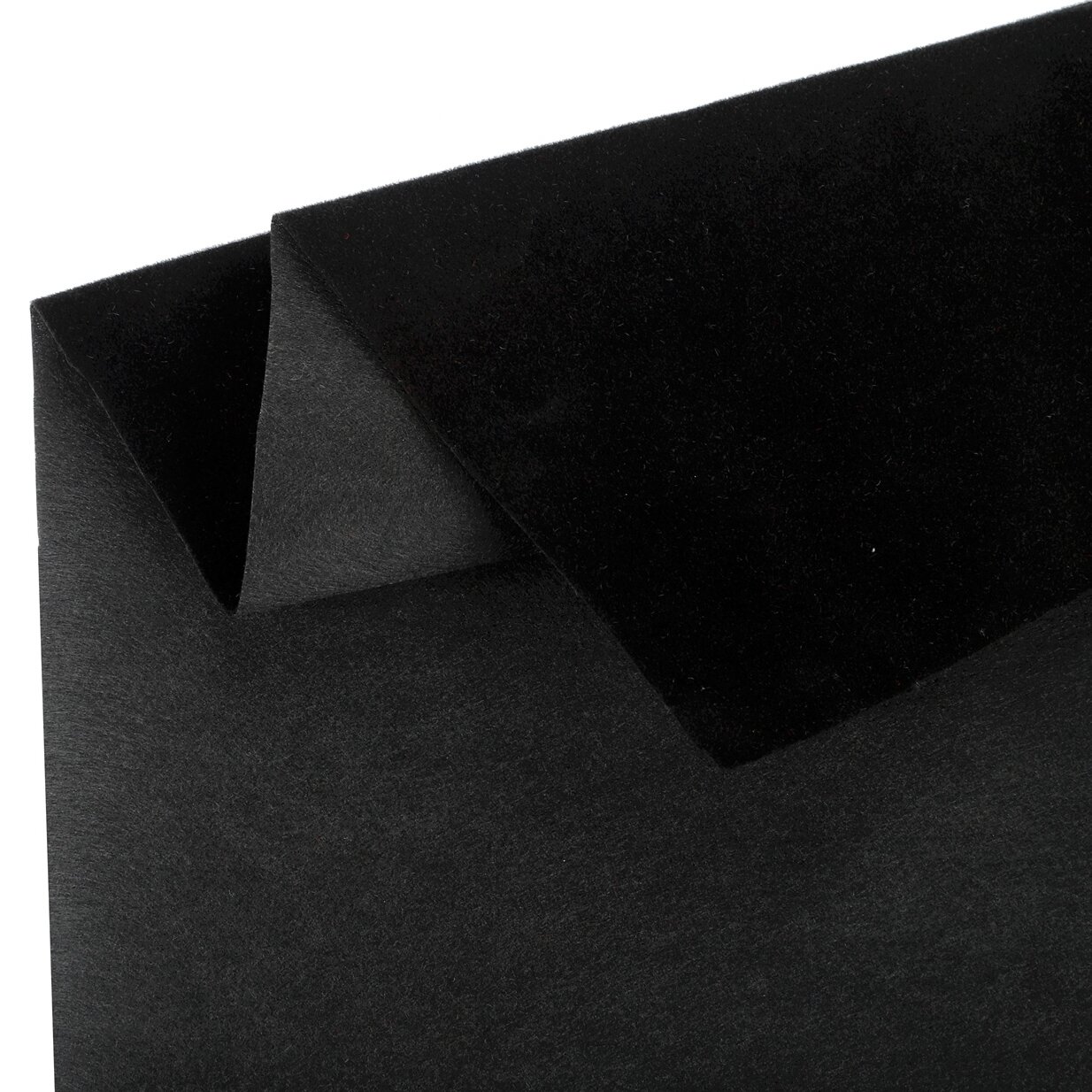
This technical balance has been validated across high-volume supply chains. For example, long-term partnerships with major brands like Chow Tai Fook require custom-matched colors with a Pantone Delta E of 0.5 or less, Grade 4+ wet/dry color fastness, and full EU REACH SVHC compliance. Whether utilized in 58-inch or 59-inch roll widths, the material maintains uniform 100-yard lengths, preventing glue bleed-through during automated self-adhesive backing or paperboard mounting.
Data & Solution Comparison
| Pile Height Range | Tactile & Visual Texture | Primary Packaging Application | Key Performance Specifications |
|---|---|---|---|
| 0.3 mm (Ultra-Dense) | Silk-smooth, high-density velvet | Luxury ring boxes, watch trays, fine jewelry linings | Delta E ≤ 0.5, 3M tape 10-cycle pass, anti-tarnish (<5 ppm sulfur) |
| 0.5 mm – 0.8 mm (Medium Pile) | Classic velvet softness with balanced touch | Standard gift boxes, eyewear cases, cosmetic packaging | Color fastness Grade 4+, weight 30–150 gsm, zero glue bleed-through |
| 1.0 mm – 1.2 mm (Long Pile) | Rich 3D plush, faux cashmere texture | External box wrap, premium pouches, furniture drawer pads | 100,000-cycle abrasion resistance, UL94 V-0 flame retardant available |
| Pearl / Textured Finish | Granular bead-like texture (Claimond veins) | Specialty liquor boxes, luxury display inserts | Precision die-cut tolerance ±0.1 mm, GRS recycled fiber option |
Frequently Asked Questions (FAQ)
How does flocking fabric thickness impact precision die-cutting for box inserts?
Maintaining a uniform total thickness (base fabric plus pile height) is crucial for automated die-cutting equipment. A precise pile height control to 0.01 mm combined with nonwoven bases between 30 and 150 gsm ensures clean die-cut edges within a ±0.1 mm tolerance, preventing frayed borders or improper insert fit inside rigid box cavities.
What chemical parameters prevent silver tarnishing inside flocked jewelry packaging?
Silver tarnishing is primarily driven by reactive sulfur, volatile organic acids, and extreme pH levels. High-performance flocking fabric requires non-sulfur dye systems, sulfur-free water-based acrylic adhesives, free reactive sulfur under 5 ppm, and an extract pH of 5.5 to 7.5 to pass batch-level silver coupon accelerated corrosion tests.
Is self-adhesive backing suitable for packaging flocking fabric?
Yes. Self-adhesive pressure-sensitive backing can be directly applied to nonwoven or spunlace flocking fabrics. The backing layer achieves a peel strength of at least 2 N/25 mm, enabling rapid manual or automated mounting onto paperboard, wood, or plastic substrates without liquid glue seepage.
Final Conclusion & Recommendations
Selecting the optimal thickness for packaging flocking fabric requires balancing a 0.3 mm to 1.2 mm pile height with a stable base substrate to achieve high visual quality, anti-tarnish protection, and exact structural fit. Selecting nonwoven or spunlace base materials with verified ISO 9001, REACH, and RoHS compliance ensures long-term safety for export-grade jewelry packaging. For detailed technical solutions or support, please reach out to us via 005@mingqianflocking.com.
About Us
Guangdong Shunde Mingqian Flocking Co., Ltd. is a specialized flocking fabric manufacturer established in 2008. Operating a self-owned 12,000-square-meter facility with over 100 employees, the company houses 5 automated electrostatic flocking lines and yields a monthly production capacity exceeding 3,000,000 yards. Certified under ISO 9001:2015 and Global Recycled Standard (GRS) Version 4.0, Mingqian Flocking holds full EU REACH SVHC and RoHS 2.0 compliance, supplying premium packaging materials across North America, Europe, and Asia. 
Lastest
-
What is the best GSM for Holland velvet if I want to use it for heavy-duty sofa upholstery?
2026-08-07 -
How do I choose between Holland velvet, suede, and corduroy for commercial sofas?
2026-08-07 -
How do I choose the right electrostatic flocking fabric density for automotive interiors?
2026-08-07 -
How do I choose the right GSM for packaging flocking fabric to avoid shedding?
2026-08-07 -
How do I choose the right density of gift box flocking lining to prevent shedding?
2026-08-07
SUBSCRIBE
INQUIRY